
Learning and Living Well

It’s been 4 years since Building Bridges to the Future was published. On April 18, 2022, UWC published a blog that contained my reflections about the connection between learning and living well. A report from that site, in part, so I do not lose this reflection.

“Connie Chung has been following UWC’s work for quite some years and was also a speaker at the 2016 UWC International Congress in Trieste. We asked her to tell us why UWC features among the final ten projects chosen [as a case study to be included in the book, Building Bridges to the Future]. 

“I’ve known my friend David Evans since high school, when teachers often assigned seats in classes alphabetically by last name, Chung: Evans. A well-respected and whip-smart leader among peers, he was friends with a wide circle of people yet always maintained his independent spirit. We lost touch a few years after he decided to attend a high school in New Mexico, but when we reconnected, it was no surprise to me that he is currently a Lead Economist in the Chief Economist’s Office for the Africa Region of the World Bank. More than ever, I saw that he was continuing to balance his keen intellect with humor, warmth, and humanity. For example, he not just reads widely and prolifically but summarizes and shares his unique perspective on books, movies, and research creatively in a popular personal blog. He credits his decision to study economics with the objective of helping people to his high school economics teacher at UWC-USA in Montezuma, New Mexico.

Similarly, I’ve known my friend Jo Hunter Adams for over fifteen years now. Ever since I’ve known her, she has aspired continuously to live her values in the way she manages her resources, time, and relationships. Originally from Cape Town, she resides there now with her growing family, as a postdoctoral research fellow in the Health Economics Unit at the University of Cape Town, conducting food studies research. Living on a farm in a house her husband designed and helped to build, she and her husband recently also bought a garden nursery to find ways to make the land useful to others. She reflects and writes about her daily efforts to live simply, sustainably, and well with her family in her blog, The Concrete Gardener. She credits the journey she has been on to the fact that she was fortunate enough to be one of the students selected from South Africa to attend UWC Atlantic College.

When we started to do research at the Harvard Graduate School of Education’s Global Education Innovation Initiative to identify education organizations around the world that were teaching young people to develop not only their cognitive but also their social and emotional skills, I did not know the UWC movement well. I had not yet linked the friends I admired – Dave and Jo – with UWC. But somewhere during our process of paring our initial selection of 100 organizations to 50 and then to the 10 organizations we would profile more deeply in the book Building Bridges to the Future: Global Case Studies of Teaching and Learning in the 21st Century – I made the connection to the kinds of lives that Dave and Jo were leading and the people they are to the distinctive orientation and values of UWC.

Perhaps it was because of the UWC graduates I was meeting by chance during the course of conducting the research, such as Yi Wang, the Executive Director of the Harvard Center Shanghai. We had approached him independently to ask him for advice and insight and he was instrumental in assisting us with resources to identify innovative education organizations in China. It turned out that he was the co-founder and Vice Chair of UWC Changshu China, and he accompanied us on a two-hour drive to visit the campus. Like Dave and Jo, Yi was deeply thoughtful and intentional in his awareness and desire that his choices impact the world around him in positive ways. He was one of the first high school students from China to be selected to attend Pearson College UWC and he spoke passionately about how formative the experience was for him.

In education, we speak about impact, metrics, tests, curriculum, pedagogy, innovation, and a host of other things which are important. But as many UWC school heads shared with me during interviews, we must not lose sight of the fact that we are using all these items as means to develop whole human beings who have so much potential to influence the people, organizations, and communities in which they live and work. From the UWC Executive Director to the school heads, the consistent message I heard during my research was that the UWC movement was deliberately focused on a broader vision and mission for education, which is on how students “live the UWC mission about peace, sustainability, and justice, and how they impact the others around them, and how much [the UWC schools can] equip the students with the life skills they will need.”

When I asked about the schooling practices that promoted the UWC mission, school heads spoke as much, if not more, about the importance of mindsets and the quality of trusting relationships among staff and students. They spoke as passionately about cultivating intentionally inclusive and empowering organizational cultures as they did about curricula and pedagogy. In addition, I was struck by the humility and courage that marked everyone with whom I spoke, who talked as much about ways they could be doing better as they did about what they were doing well.

Perhaps 17 schools seem like a small number among the millions of schools around the world. And perhaps not every school network can put together national selection committees in over 155 countries and financially support students from over 80 countries to live together on the same campus. Yet the focus, intentionality, commitment, and breadth of inspiring vision for education that UWC offers, along with the grounded humility, effort, and passion that guides its staff are elements that can be more widely shared among educators. It was with this hope that we included UWC among the 10 organizations we profiled in this book. The UWC movement is a reminder to all of us that the ultimate outcomes of education are whole human beings like Dave, Jo, and Yi, who live lives that advance making real the vision of a more peaceful, sustainable, just, and caring world.”
 
Connie K. Chung is a former high school English teacher and researcher working at the intersection of policy, research, and practice. She assists a variety of governmental and non-governmental education organisations equipping the next generation of young people to create thriving communities. She is the former Associate Director of the Global Education Innovation Initiative at Harvard Graduate School of Education, and was one of the guest speakers at the 2016 UWC Congress in Trieste. 

Building Bridges to the Future: Global Case Studies of Teaching and Learning in the 21st Century can be found for free on Apple’s iBookstore, Barnes and Noble, Smashwords, and for $0.99 on Amazon.

Automating and Deciding Well

In August, I went to an island in Maine with 6 friends, for the second year in a row. From the coast of Maine, we made our way to the island by a lobster boat and a dinghy.

While it is only a 5 hour drive from Boston, it is otherworldly. A 10 minute walk  takes us to a 3 story, 8-bedroom house built in the 1800s. The only electricity is on the first floor, powered by solar panels. We use an outhouse and an outdoor shower, rigged with plastic bags of water that has to be heated by the sun or on the stove. While the refrigerator and oven run by a generator, dishes are hand washed with water from a small hand pump by the sink and then rinsed with boiled water to ensure sanitation. We get our drinking water separately from a well that we walk to with a two-wheeled cart. It’s at least a two-person job to get the water from the well, with one person holding the water container in place while the other pumps. Both people usually have to fend off gentle but persistent attacks from mosquitoes and other bugs.

This year, like last year, was full of wonder.

There are wild blueberries growing all over the island. We pick them, slowly, with bent backs, and make blueberry cake with a recipe that has been posted on the wall of the kitchen for longer than most of us have been alive. There is an abandoned lighthouse to hike to through a forest, over a salt marsh, and along the coast, on paths marked by buoys. A complete walk around the island takes about 3 hours, and every bend has a different, beautiful view of the forest or the ocean.

A deep “punch bowl” made by a circle of small rocks in cliff formation and crashing sea waves, makes for a wonderful swimming pool for jumping into the ice cold ocean water. Even though it is the middle of August, evenings call for fires to be built in the living room. We play board games together, nap, and read on a hammock strung up between two trees perfectly spaced apart for the purpose. This year, we had an impromptu dance party in the kitchen, and inadvertently drew neighbors from a distance when we went out on the widow’s walk in the evening to watch the Perseid meteor shower. We laughed so much, our neighbors thought we were having a party, not lying on our backs, staring at the starlight sky.

This year, knowing a little bit about what to expect, I looked forward to slowing down and unplugging, literally. It was lovely to live so close to nature, even for a little bit. I relished the experience, with time and space to rest and to be. I did not want to leave. What I didn’t expect, though, was that the time on the island would lead me to think about how much automation has been part of our lives for hundreds, if not thousands, of years.

Indoor plumbing, electricity, dishwashers, and indoor heating, are all manifestations of automation, a phenomenon some have traced as far back as Homer’s Iliad. Hephaistos, the god of fire, metalworking, stone masonry, and sculpture is also the “god of the dragging footsteps.” Perhaps understandably, given this difficulty in movement, Hephaistos “set golden wheels underneath the base of each [tripod] so that of their own motion they could wheel into the immortal gathering, and return to his house: a wonder to look at,” wrote the Greek poet in mid-8th century BC.

In the 21st century, with rapid developments in machine learning and artificial intelligence, some have raised fears while others have said that these fears are overblown. Both are likely right. Dishwashing and woodcutting have almost disappeared as professions while developments in these areas have freed us with more time to spend in other ways. Simply put, automation enables us to do more in less time. Most articles I have read on this topic, however, are written curiously in the passive voice – ie. “automation will make our lives better/ worse.” Yet “automation” does not have agency. Humans deciding whether and how to use automation, however, do. Whether we choose to use automation in ways that help us or harm us, is ultimately up to us.

The thing that I fear, however, is whether we make enough time for ourselves to slow down and think thoughtfully and carefully about the decisions that impact our future. Or whether we are forced by the speed with which we now live our lives (courtesy of automation, among other things) and the demands of productivity by which we measure the quality of our lives (courtesy of values associated with automation) to act before we have the time to think our decisions through… A recent article summarizes some research about deciding well, and the correlation between the number of alternatives considered before making a decision and the success of the decision.

IMG_5270

Resilience is communal

My cell phone & wallet were pick-pocketed in Paris yesterday morning, just as I arrived in the city to help facilitate a global meeting of education policymakers and other stakeholders. Amid the worry, I found many things to be thankful for:

1. Clara, who descended on me like an angel, coming straight away to lend euros, take me to coffee, walk around the city with me to make my mind off my worries.

2. Friends to whom I reached out and immediately get empathetic support.

3. It’s great to have a mother, who, when I had lost something in elementary school and was devastated, told me, “It’s okay – someone else must have needed it more than you did.” I went back to those words.

4. So many strangers helped, from lending me phones to use, giving me directions to get me to places, patiently helping with questions while cancelling things and just trying to make me feel better… the manager of the hotel where I was staying, gave me an upgrade, saying, “I’m sorry this happened to you, and I wish I could do more, but maybe this will help…”

5. I also instinctively went back to the words – “forgive those who trespass against you” – and said a quick prayer forgiving the people who stole from me. I was glad for the freedom it gave in helping me to release feelings of anger & disappointment…

6. Empathy toward those who stole also reoriented me – what kind of situations must have they been in…?

7. A good grounding and an ironic incident, too, as I’m in the city helping to continue the work about what students need to learn, and specifically with a working group on teaching attitudes and values….

8. At the end of the day, it’s just things that can be replaced.

9. Late last night, my sister called the hotel where I would be staying the following night to give them her credit card number and she found out that my wallet and phone had been turned in to this hotel. My cash & credit card were gone, but everything else was still there. It turned out another tourist had found them abandoned, saw the name of the hotel from the notification from my phone calendar, and had brought it to the hotel.

10. I can’t help but think that while resilience may be an individual trait, it is developed and experienced in community. We are interconnected, in good ways and bad ways, in ways we choose to be, and we can either make each other stronger or weaker. It is up to us and the choices we make.

Teaching (puppies) well

puppyshutterstock_224423782_puppyrunning

This video came across my screen this morning. I couldn’t help but think how it offers a glimpse into how teaching and learning is more than just talking at students. It demonstrates in about 2.5 minutes, how learning is a social and emotional process and how collaborative teaching can help.

Today’s objective: Teach a puppy to navigate down the stairs for the first time…

In the video, the “teacher” begins as many teachers would, placing himself in front of the puppy student and guiding him with his words. The teacher quickly realizes, though, with empathy for the pup’s fears, that verbal guidance and encouragement is not enough to help the puppy take the first step down the stairs.  So he gets down on his hands and knees, right next to the puppy, to model what he wants to see the canine learner do.

As the teacher is laser-focused on the needs of the student, the videographer keeps her eyes on the big picture and points to something in the the teacher misses. Whispering as to not break the student’s focus, she offers important suggestions: “Move him to the other side! It’s dangerous where he is!”  The teacher quickly adjusts the puppy’s position in response.

He continues to focus on his “student,” gently guiding him in the little, subtle things such as where to put his paws and how to navigate the stairs.  He accompanies the student along the learning journey as a co-learner (I bet this is the first time the teacher is himself crawling down the stairs on all fours), and allows for mistakes, coaching the puppy as he takes the stairs down for the first time.

Meanwhile, the co-teacher/ videographer showers the puppy with praise and encouragement, and together, all three of them make it down the stairs, with the videographer doing everything backwards and sideways (I imagine).

This little video captures in a snapshot how how teaching is much more complex than telling students what to do and how it involves navigating simultaneously the social, emotional, and cognitive dimensions.  It involves focusing not just on the student, but on the environment and context as well.

Most teachers do this kind of multi-modal thinking, feeling, acting, reflecting, and responding with 150 different students every day, without a co-teacher and certainly no videographer.  No wonder the best of them are ready to pass out by Friday afternoon….

If I were to run a professional development workshop to show what teaching might entail, this little video might be a gem of a one to use.

Image from: http://dogequipmentexpert.com/most-important-things-to-teach-a-puppy/

Working well in an AI age

A few minutes after I closed a chapter of my life, leaving Harvard after 17 years as an undergraduate and graduate student, lecturer, and associate director of a global education research lab, I received an email from a Yale professor of computer science.  He asked if I could come give a keynote at a conference he was running about transforming higher education; it was to be the third annual gathering of Chinese American professors.

I replied that I was not Chinese American and that I was no longer part of a higher education institution.  But he still wanted to talk to me over the phone. I further clarified on the phone that transforming higher education was not my area of research (I’d win at authenticity but lose at self-marketing, I know!).

BUT, I said, I have been thinking quite intensely about transforming K-12 education in many contexts, including in China. And in most conversations I had with others interested in the topic, local education stakeholders identified the admissions process for higher education as a big road block to change.

In places like China, the narrow focus on memorization and cognitive tasks in high stakes college entrance exams have tended to shape the learning experiences of students, no matter what the stated curriculum might be or however many great new ideas were introduced in pedagogy.  Could I talk about that issue and why it is such a big challenge to overcome when our world is undergoing seismic shifts in how we live and work? He said yes.

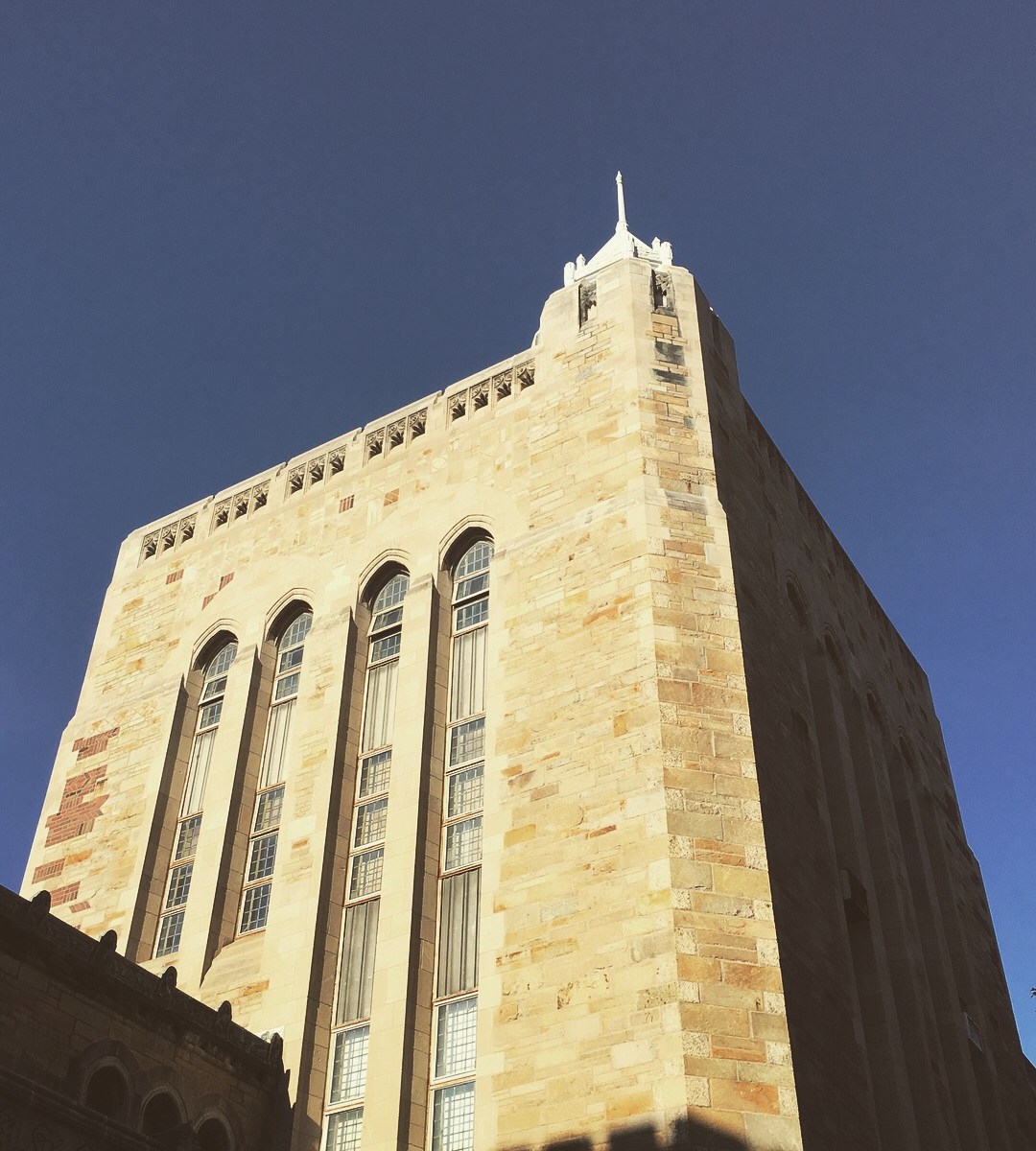
It was lovely to be on Yale’s beautiful campus, even for a short while, and I laid out an argument for what needed to change and why.  It was well received, and I was glad for the professor who took the chance to invite me.

But one question emerged from the audience that has lingered on my mind since the conference: Of all the qualities that are helpful to possess in this new world, such as creativity, collaboration, and flexibility – why wasn’t “hard work” mentioned?  I replied that I had just assumed “hard work” was a given.

I have taught high school and graduate students who were hard working and saw how important that habit was to their success – but also had seen that a narrow definition of achievement as measured only by grades and acceptance to a small number of “acceptable” universities was detrimental to their overall well-being. I found myself telling them – perhaps morbidly – that when they died, their tombstones would not say, “Stanford AB 2022, Yale JD 2025,” but that rather, that they would be remembered for the kind of daughter, mother, partner, friend, co-worker, and contributor to their communities they were (and that hard work and achievement matter – but that they are the means, not the ends…).

And what I should have added – was that this current system of education that is built on an implicit theory and assumption that working hard to do well on tests will lead to success – simply no longer works as well as it used to.  One of the key changes that mark this fourth industrial revolution is the prevalence of computers and machines that are quite sophisticated in their function.

In such an age, humans simply do not have a competitive advantage over computers and machines when it comes to working hard. Put another way, a human being will always lose every single time she is pitted against a machine or a computer to see which one will work harder. Machines and computers do not need food, water, nor sleep.  The few times people have tried to work hard as though they were machines ended – literally – in their deaths. And dying is no way to live well.

We are entering a new frontier in human existence, where we have to create a better world for ourselves, while living with advanced technology.  It’s up to us to determine what this brave new world might look like, as MIT president L. Rafael Reif noted.  But the answer will not come from our merely “working harder.”


Playing the long game in education in Singapore

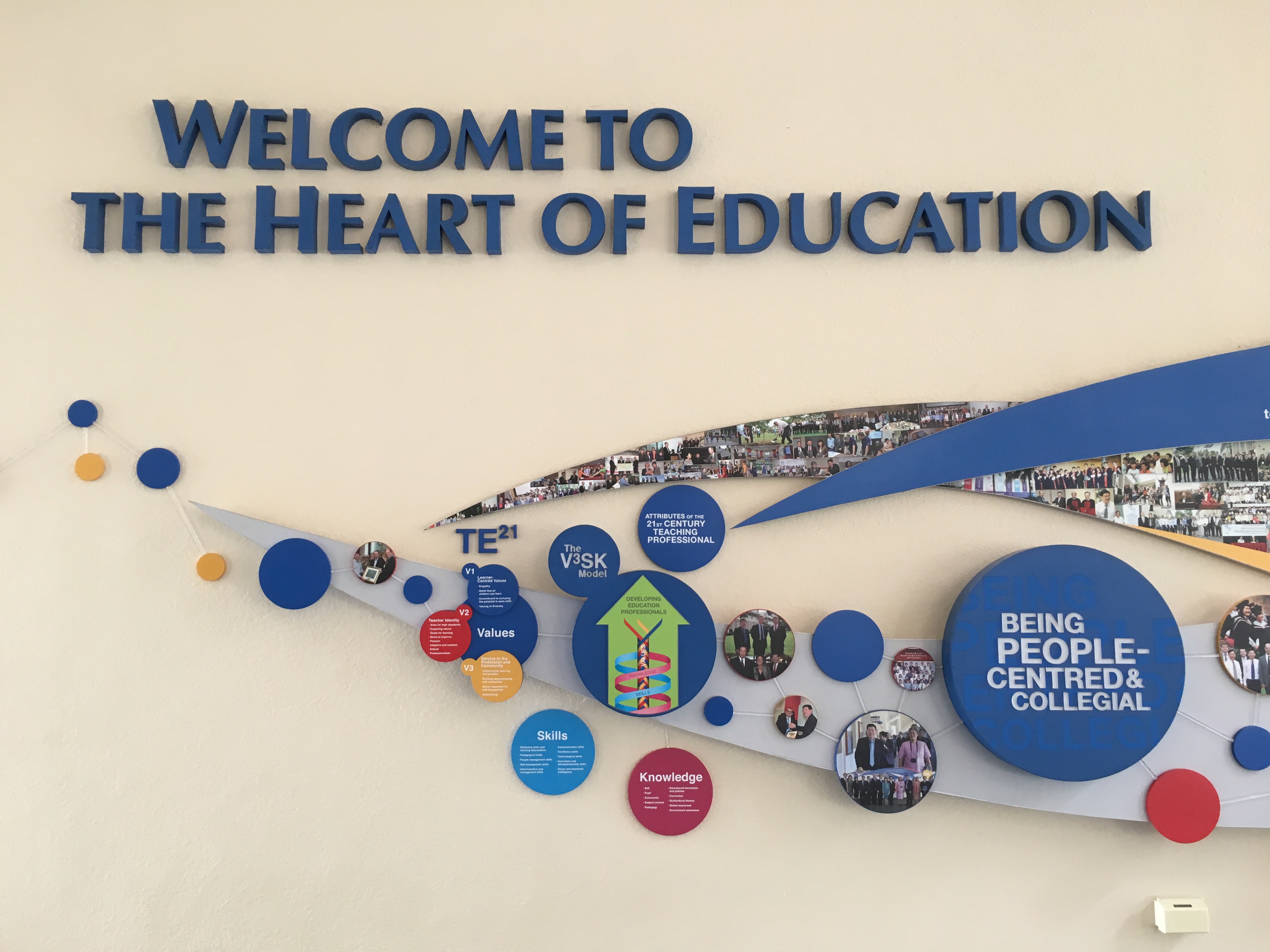
IMG_9550In October 2015, I visited Singapore with colleagues from Massachusetts who are leaders of universities, foundations, research organizations, and nonprofits working in education. We focused on learning about Singapore’s education system during our five-day visit. I highlight below a few thoughts from our trip.
The key difference between our education system in the United States and the Singaporean system is that while we think and invest in individuals and programs, aware of our short political, policy, and funding cycles, Singaporeans think and invest in systems, taking advantage of their longer term political and policy cycles. I draw this thesis from a few observations made on the trip, outlined below.

1.  How systems support 21st century teaching and learning in Singapore

Singaporean teachers enter a highly developed, thoughtfully constructed system of training and selection that tracks, supports, and develops them. While there is a high bar for entry into the profession, and a rigorous evaluation of teachers that includes a way to dismiss low performing teachers, once a teacher enters a teacher preparation program, there is a clearly articulated pathway for professional growth, as a master teacher, school leader, or subject specialist. Teacher retention levels are high, and only 3% of the teachers leave each year [1]. Regular and systematic transfer of personnel among the Ministry of Education, schools, teacher preparation and research institutions also ensure that practice, policy, and preparation are tightly linked in the city-state; that there is a high likelihood that what teachers learn in their preparation programs is aligned with what they will actually need to do in the classroom; and that policymakers and researchers have practitioners’ points of view in mind as they develop policy and design their research agendas.

Furthermore, in Singapore, there is an assumption that teaching well is a highly demanding and skilled work, requiring systematic cultivation and support. Thus, policymakers appear to focus their attention on developing a system that will identify and support better learning and teaching in their schools, rather than on methods to reward and punish individual teachers, schools, and districts as the primary lever of change.   For example, they recently established the Academy of Singapore Teachers that builds a “teacher-led culture of professional excellence centered on the holistic development of the child” in their schools. [2] Individual teachers may have weaknesses, but the overwhelming strength of the Singaporean system of professional development appears to be designed to compensate for those shortcomings, ensuring that students will have a good chance of encountering effective teachers.

Similarly, Singapore’s educational practices are part of a system, knitted together under a single comprehensive national framework and a series of long-term national strategies for teaching and learning. During our trip, we were told about the history of Singapore, with the identification of four key periods of educational policy that led to the development of the current education system, with each period lasting 14 to 17 years. This relatively long-term, system-wide and systematic approach education ensures that principals and teachers in Singapore have the opportunity to not just know the driving principles and key ideas for the system, but also have the time and resources with which to put them to practice and execute them.

For example, on our trip we visited the Crescent Girls School, where the principal was piloting new ways to use technology in the classroom. She was not just helping her teachers and students experience new ways of learning, not just following the latest entrepreneurial idea she had picked up from her days at Stanford, and not just ensuring that her schools remained attractive to parents and funders. Instead, because her school was a designated pilot school tasked with finding ways other schools in Singapore might more effectively use technology in their classrooms, she had a wealth of new equipment and support staff to assist her in implementing her ideas, including the funding to form a partnership with a research organization at Stanford to assess their progress in this work. The decisions made by the principal as a building leader appear to have been informed by a larger, unifying vision and coherent education strategy for the country as a whole, which allowed room for innovation and improvement. Under such a coherent system of practice, goals and principles are not just talking and advocacy points but are supported with human and financial resources; thus, they have a higher chance of not just being implemented, but of being developed into good practices, refined over a period of years, and then spread to other schools throughout the education system[3].

2.     Singapore’s ambitious and comprehensive learning goals for students

Perhaps because they have the luxury of knowing that they have an entire system behind them, Singapore’s education leaders take on ambitious and comprehensive learning goals for their students. They explicitly plan for and aim to provide an education to their students that is expansive and responsive to the changing local and global contexts, including past, present, and future needs, challenges, and opportunities in their country and in the world. We saw these aspirations as our visit coincided with Singapore’s celebration of its 50th anniversary “as one people”[4] and less than a year after the passing of its founding Prime Minister, Lee Kwan Yew. During our visit, we saw colorful banners adorning the streets to celebrate this anniversary and heard presenters who spoke of the race riots between the Malays and the Chinese that Singapore had experienced 50 years earlier, and how they deliberately focus their efforts to ensure that the current mix of Chinese, Malay, Indians, Christians, Muslims, Hindus and other ethnic and religious groups would live well together. We found out that Singapore’s “desired student outcomes” for all of their students include being “a concerned citizen,” an “active contributor,” with “civic literacy, global awareness and cross-cultural skills.”[5]

For example, during our trip, we attended a student fair, where students training for educational management positions presented what they had learned about other countries’ education systems after self-organizing trips to these countries.  We also learned that their principal training program includes the exercise of envisioning what Singapore might look like in 20 years and thinking about how to align their schools to meet the challenges and opportunities of the future. Thus, I had the distinct impression, at least from our trip, that Singaporean education leaders at all levels were keenly aware of their history, continually thought about the future, and used the present to nurture their students and organizations so that the country would be well prepared to thrive.

3.     Playing the long game in the United States

Not having had the opportunity to visit a Singaporean classroom during the trip, however, I do not know to what degree these principles and values are actually taught to Singaporean students. But, I do know that in the United States, we have educators who are keenly aware of the racial tensions in our country’s history, who are mindful of the pressing need to teach students about other parts of the planet even as our world becomes more globalized, and the need to make education relevant, rigorous, and responsive to present and future challenges such as concerns about the environment, peace and security, and widening inequality; they also work effectively to address these concerns in the classroom. In fact, I’d posit that organizations such as Facing History and Ourselves, the Asia Society, and Expeditionary Learning/EL Education, among many others, do well in developing curricula and resources to support many of the same goals that the Singaporean system espouses.

What we do not see as much in the United States, however, is a sustained and large-scale effort to implement such programs at the systems level, and the effort to command the necessary financial and human resources to do so. We let our schools scramble for ad hoc funding and support from foundations and nonprofits, on short policy and programmatic cycles. For example, the average tenure of a US superintendent fluctuated from 2.8 years in 2008 to 3.18 years in 2014, according to the Council of Great City Schools[6], and funding cycles do not run in decades but in months and years. Under such short leadership, policy, and funding cycles – and with shifting priorities and the overwhelming pressure to align organizational goals and resources solely to produce measurable results – schools and programs tend to focus on efforts that produce short-term gains aligned to narrow goals.

As a result, we have a plethora of organizations that focus not only on a small area of concern, but on one facet of one aspect of one small area of concern, making advocacy our priority, rather than coordination, coherence, alignment, effective implementation, and systemic/ systematic improvement. After 20 years spent in education, both as a classroom teacher and a researcher speaking with practitioners, I have made the claim to colleagues in the past that in such a context, an unofficial but nevertheless a critical competency of a “good” principal and superintendent in the US is the ability to create the political room for their staff to invest in long-term, sustained improvement efforts, to “protect” them from the buffeting winds of policy priorities that appear to change every 2-3 years, and to stay in their jobs long enough to build relationships with community members and organizations that are critical to marshaling the resources necessary to sustain an excellent school and district.

My thoughts in this letter are reflective not just of our trip, but also come from having worked with colleagues from the National Institute of Education in Singapore and from research institutions in four other countries over the last two years, as part of my work at the Harvard Graduate School of Education’s Global Education Innovation Initiative. We just finished writing a book about the goals and purposes of education in the 21st century in six nations, and are writing our second book together about exemplary programs [7] in seven countries that are making an effort to teach students the competencies they will need to thrive in the 21st century. One of the preliminary findings from our second book might be that the kind of project-based teaching and learning that is relevant to developing in students not just STEM/STEAM competencies but the interpersonal and intrapersonal competencies necessary to thrive in our present world, requires the efforts of not just individual teachers and schools, but of teams of teachers, networks of schools, multiple stakeholders including teacher education and principal training programs, private foundations, and entire educational systems. Perhaps with these letters from Singapore, we can instigate the kind of conversations and activities that will lead to continuing to develop in Massachusetts and in the United States a systemic and systematic approach to teaching and learning, so that policymakers and education leaders are encouraged to play the long game.

*************
Other letters written by members of this trip can be downloaded for free and read here:

[1] Personal communication, Dr. Ee-Ling Low, Head of Office of Strategic Planning and Academic Quality, National Institution of Education, 2015.

[3]Because our time in Singapore was so short, I’m not sure to what degree these resources are equitably distributed among the different schools and neighborhoods; but overall, in general, there appears to be an explicit effort to support students, including the creation of special schools for students at risk of dropping out, such as the NorthLight School, and the Institute of Technical Education to support those who are sorted into vocational schools. Also, the brevity of this letter precludes me from expressing the concerns and drawbacks I see in the Singaporean education system and the benefits I see in the US system, so I submit this letter knowing that it may read as being too laudatory of one, and too detractive of the other.

[7] We first looked for systems, but could not find them, so looked to programs.

Learning to know the world well

ReadingtheWorldPortions of the essay I wrote below was adapted and published in the K-12 global citizenship curriculum resource, Empowering Global Citizens, by Reimers, Chopra, Chung, Higdon, and O’Donnell

Researchers have noted that traditional global citizenship education (GCE) curriculum encourages students to understand globalization; to adopt a self-critical approach to how they and their nation are implicated in local and global problems; to engage in intercultural perspectives and diversity (Pashby, 2008); and to recognize and use their political agency towards effecting change and promoting social and environmental justice (Eidoo et al, 2011).  Schurgurensky (2005) observes, “transformative citizenship learning involves the nurturing of caring and critical citizens who raise important questions and problems in overt ways” and “probe the status quo” (Eidoo et al, 2011).  “Andreotti (2006) further draws the distinction between “soft” and “critical” global citizenship education and looks to critical literacy for a pedagogical approach that  “prioritizes critical reflection and asks learners to recognize their own context and their own and others’ epistemological and ontological assumptions.

Furthermore, she argues that in order “to think otherwise” and to transform views and relationships, learners must engage with their own and others’ perspectives.  Andreotti’s ‘critical’ global citizenship model promotes citizenship action as “a choice of the individual after a careful analysis of the context of intervention, of different views, of power relations (especially the position of who is intervening) and of short and long term (positive and negative) implications of goals and strategies” (p. 7). Key concepts of critical GCE include transformation, criticality, self-reflexivity, diversity, complicity, and agency” (Eidoo et al, 2011).

Existing Curriculum vs Our Global Citizenship Curriculum

While the AP curriculum emphasizes breadth of knowledge, and the US standards movement lists discrete skills, knowledge, or attitudes that people wish to impart to the students, our curriculum seeks to develop a depth of knowledge and “expert” thinking required to solve problems.  In our desire to integrate knowledge, skills and attitudes – that is, not only impart knowledge, but also focus on teaching skills and attitudes – that would prepare learners for the 21st century, we found that a focus on developing an interdisciplinary approach to curricular development was necessary.  When we looked at the AP curriculum as a possible framework for curriculum design, for example, we were impressed by the breadth of knowledge that was required by the program; however, we ultimately felt that we wanted to emphasize depth of knowledge, given the kind of “expert” thinking required to solve problems.

In addition, rather than imposing on the students a list of discrete skills, knowledge, or attitudes that we wished to impart to the students, we wanted the students to find and make meaning in their learning.   Thus, our curriculum focuses on learning that is integrated and grounded in current social, political, economic, and other concerns, focusing on issues that are complex, with no easy answers or solutions.  We believed that students would find value in, and desire to engage with, issues that were “real” and authentic; and that in being asked to engage with these real-life issues, the learners would be more motivated to learn the skills and knowledge necessary to understand and solve these issues.

For example, our curriculum centers on issues like immigration and the impact of human migration on the environment, and the kinds of knowledge, skills and attitudes that are necessary to address these issues.  Such an approach led us to fields such as demography that is not a subject that is taught in many schools, but a topic that we thought was essential for learning how to address issues about population growth and its impact.  Another example of difference from other more traditional global citizenship education curriculum would be our curriculum’s focus on social entrepreneurship; while a few business classes may be taught in high schools, we deliberately brought the subject to the lower grades, and coupled it with developing students’ understanding of international development and notions of justice and equity.

Banks (2008) and Nieto (2002) note that a “transformative” education teaches people to develop decision-making and social action skills; identify problems in society; acquire knowledge related to their communities; name and clarify their values; and take thoughtful individual and collective civic action to address inequities and injustices. In structuring such a “transformative education,” focused on developing students’ cognitive knowledge (Fitzgerald, 2005) by focusing on topics such as the following: development and sustainable development; cultural identity and diversity; human rights and responsibilities; equality and social justice; peace, conflict and resolution; geographic, economic, political, social and environmental knowledge about the world.  We also sought to ground these pieces of information by introducing students to exemplars of change agents, both historical and current figures, who have worked and are working to create positive change in their communities.

Like other global education curriculum, we focused on intercultural competencies to develop the values, attitudes and perceptions of students.  For example, we wanted students to understand how cultures can shape identities, including their own.  Through our curriculum, we sought to develop empathy in the students through perspective taking exercises (Bob Selman at HGSE has written on this topic).  We also draw upon literature and the arts to encourage creative expression in the global studies course.  In addition to individual development, we focused on the students’ development as members of teams, who are able to work productively in and lead effectively inter-cultural teams.  We built in curricular opportunities for student so develop skills in negotiation, mediation, and conflict resolution skills.

Agents of Change

In developing the curriculum we also took into consideration such findings from a study about teaching justice to privileged adolescents (Seider, 2009), which noted that mere knowledge about the world’s problems will not only overwhelm students and lead them to disengage with the world.  For example, when faced with data about global poverty, students may react with defensiveness, so we incorporated into the curriculum, not just data about problems and skills to overcome them, but also examples of viable solutions to issues, and people working toward those kinds of change, to impart to students the idea that these issues can be overcome.

We focused on introducing choice, developing capacity, and motivating them to contribute to the world around them, in small and large ways (2005).  We sought to cultivate in the students a focus on being innovative and creative in formulating solutions to real global challenges and seizing global opportunities.  To do so, the curriculum is largely project-based, with a cumulative sequencing of units within and across grades.   We include how geographic, disciplinary, and professional contexts matter in devising effective solutions to global challenges.   In particular, we sought to ground students in the reality of the world, but also infused the notion of agency and possibility, along with concrete skills and projects that would teach them to be agents of change.

Along with curricular emphases on fairness and global citizenship, we also wanted to make sure that students felt that they had the freedom to choose how they wanted to engage with these issues, so that they did not feel the emphases was heavy-handed.  For example, at the high school level, the final projects are broadly conceived and open to the students’ own conceptions of how they wanted to apply these skills and knowledge, whether they wanted to be a scientist, an artist, or a politician.  We wanted a strong core body of knowledge and skills that would be ably used by learners who had developed the attitude of compassion, responsibility and efficacy about changing the world around them.  While the students will be thoughtfully guided by their teachers in developing these projects, they are ultimately encouraged and are able to carry out their projects independently.

Project-Based & Group Learning

Through a combination of knowledge, skills and attitudes that are taught in project-based, cumulative sequencing of units within and across grades, our various units about different cultures and regions of the world were intended to cultivate the students’ ability not only to seek and identify the best global practices and transfer them across geographic, disciplinary, and professional contexts, but also in their ability to recognize how these different geographic, cultural, and other perspectives matter in devising effective solutions to global challenges.   More than merely engaging in individualized learning, students are asked to interact with others, learn with others, and influence others.  For example, in grade 5 they are asked to create an awareness project about the MDGs; then in grade 6, they are asked to implement an advocacy project about the MDGs.

Assessment: More than a Number

From kindergarten, students are not only learning, but are engaged in demonstrating their understanding of what they learned throughout the year.  We integrated formative and summative assessments throughout the course.  More than merely displaying knowledge, students are asked to engage in creating a product, whether it be a puppet show (kindergarten), a book (grade 1), a business (grade 3) a game (grade 4), or a social enterprise (grade 8).  Learning is constructed as cumulative, with knowledge building on prior experience and understanding. For example, in Grade 3, students learn to understand global inter-dependence through participating in creating a social enterprise project in chocolate manufacturing.  The learning objective is to build an entrepreneurial spirit in young children through an understanding of global food chains using the case of chocolate, specifically.  The primary geographic focus is West Africa, in chocolate manufacturing countries.

The year ends with a capstone activity that gives the students the opportunity to engage in complex, activity-based tasks that incorporate the skills, knowledge, and attitudes that they have learned during the year. The capstone activity for grade 3 is to create a marketing campaign for the chocolate they have made and to differentiate their product based on the culture of their target market.  They build toward this capstone activity through the following units: 3.1 The life of a chocolate and its history; 3.2 Let’s make our own chocolate; 3.3 Understanding the culture of my market; 3.4 Marketing my chocolate in school; 3.5 Child Labor; 3.6 Taking my chocolate to the market; 3.7 Moving beyond chocolate.

Other capstone activities include the following.  Kindergarten – Take part in a puppet show performance on understanding difference; Grade 1 – Create a “Book of Me”;  Grade 2 – Educate others; Grade 3 –  Create a business (chocolate); Grade 4 – Create a game about civilizations; Grade 5 – Create an awareness project on MDGs; Grade 6 – Implement an advocacy project about an MDG; Grade 7 – Participate in extended service learning; Grade 8 – Create a Social Enterprise around a MDG.  In many cases, the capstone activities build on each other; in grade 5, for example, they are asked to create an awareness project to inform others about the MDGs while in grade 6, they are then asked to implement an advocacy project about the MDGs.

Our aim is to have students who are capable of demonstrating innovation and creativity in formulating solutions to real global challenges and seizing global opportunities.  Our various units about different cultures and regions of the world are intended to foster the students’ ability not only to seek and identify the best global practices and transfer them across geographic, disciplinary, and professional contexts, but also in their ability to recognize how these different geographic, cultural, and other perspectives matter in devising effective solutions to global challenges.  They are able to think in nuanced ways, paying attention to local details and understand that there is variation not only across contexts but within contexts as well.

*Image taken from: https://goo.gl/images/9Lu1yw